How Does Regulation Impact the BTC Price?
Regulatory developments have an immediate impact on Bitcoin price. This is especially true when it comes to clarity regarding cryptocurrency regulations.
Unlike other assets, like equities, which can be diluted by printing more money, Bitcoin’s supply will never increase beyond 21 million coins. This scarcity makes it more resistant to inflation.
Regulatory clarity
One of the main obstacles to Bitcoin’s adoption has been the lack of clear regulations. This has made many traditional financial institutions reluctant to engage with the cryptocurrency, fearing regulatory repercussions. Clearer regulations are expected to increase confidence in Bitcoin’s legitimacy, encouraging institutions and investors to invest more. They will also ensure compliance with the law and facilitate the confident provision of Bitcoin-related services.
Cryptocurrency regulation is crucial to Bitcoin’s long-term survival. Without it, the blockchain could become a Wild West, where users face a number of risks. These include theft, fraud, and regulatory uncertainty. A lack of regulation can also lead to a loss of investor confidence, which could derail the Bitcoin ecosystem. Moreover, without clarity, the price of Bitcoin and other digital assets could fluctuate drastically.
The price of bitcoin is highly correlated with its regulatory environment. In the past, the price of bitcoin has dropped dramatically when regulatory issues have arisen. For example, the Silk Road scandal prompted increased government scrutiny of Bitcoin, and prices plummeted.
Despite these challenges, Bitcoin has been on a steady rise this year. The SEC’s approval of a spot ETF, positive market sentiment, and technological advancements have all contributed to its growth. However, the success of spot ETFs shouldn’t obscure the fact that regulatory issues remain an obstacle to wider crypto acceptance.
A key challenge to the growth of cryptocurrencies is their volatility. Unlike fiat currencies, which are tied to stable monetary policies, cryptocurrencies are not. This volatility makes them unsuitable for mainstream investment and can cause investors to lose money. In addition, a lack of reliable information can lead to price manipulation and scams. Fortunately, a new study suggests that cryptocurrency regulation can reduce volatility by creating more efficient markets.
The researchers found that coins with the most transparent trading conditions are those with the lowest volatility. In addition, they found that regulating the transaction costs of coins can improve their liquidity and encourage investors to trade them. The authors of the study recommend that regulated digital assets be listed on exchanges that provide vetted information to investors. This will help reduce the risk of price manipulation and make them more attractive to institutional investors.
Market sentiment
In the cryptocurrency world, market sentiment often impacts price volatility. News and media attention can cause bitcoin prices to jump dramatically, or drop suddenly. These events can also create a cycle where negative press leads to panic selling, and the cryptocurrency loses value. However, a clear regulatory environment can boost investor confidence and instill stability in the btc price.
In a recent study, researchers found that coins that are more regulated tend to have less volatility than unregulated ones. They also tend to have higher liquidity, meaning that it is easier for investors and traders to buy and sell them. The study suggests that the emergence of new technologies such as blockchain may create more efficient markets, and that a high level of regulation could help.
Regulatory clarity is essential for Bitcoin adoption, and has been a major factor in its long-term growth. Cryptocurrencies like Bitcoin have experienced considerable volatility, but the recent SEC approval of a spot bitcoin ETF and China’s new surprising pro-blockchain stance signal that the industry is maturing and becoming more mainstream. While many people have heard of cryptocurrencies, most have not made the leap to owning them, largely due to their volatility and uncertainty about their legal status. Clear regulations will provide a greater sense of stability and security for virtual assets, which will increase their appeal to investors and lenders.
While some cryptocurrency enthusiasts view impending regulation as a death knell for their Wild West world, this is an overly simplistic and myopic view of the situation. The truth is that effective regulation will bring maturity, stability, and fungibility to all compliant virtual assets. This will increase their appeal to institutional and individual investors, who will start to consider them a viable long-term investment alternative.
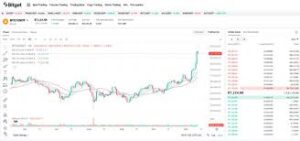
In addition, a clear regulatory environment will reduce the risk of cyberattacks and help Bitcoin grow in popularity among a wider audience. As a result, it will attract more mainstream investors and become a cornerstone in the global financial ecosystem. In fact, the most popular cryptocurrency in the world is likely to see a significant price increase if it becomes more widely accepted.
Supply and demand
While many investors are drawn to Bitcoin for its potential to serve as a store of value or hedge against inflation, a more fundamental driver is its supply and demand. The cryptocurrency’s limited supply and halving cycle makes it rare, creating a sense of scarcity that drives prices up. This is why Bitcoin is so popular during times of economic uncertainty, when investors seek out alternatives to traditional financial systems.
Investor sentiment also plays a role in driving price movements. When confidence is high, demand rises, and the price surges. Conversely, when fears or pessimism take hold, the price drops as investors sell their holdings. This feedback loop often feeds off of public perception, as a news story can quickly escalate into hype or panic. This is why a single negative development can send the price plummeting.
The influence of sentiment on the price is amplified when institutional players enter the market. BlackRock’s filing for a Bitcoin ETF, Facebook’s Libra launch, and China’s surprising pro-blockchain stance are examples of events that sparked major price gains. However, these gains have been short-lived, and institutional participation remains tepid. It’s not clear whether this is due to regulatory concerns or simply the nature of institutional investment strategies, which could exacerbate volatility rather than mitigate it.
Bitcoin’s underlying fundamentals are influenced by a variety of factors, from its capped supply and halving cycle to macroeconomic trends and the emergence of a digital-first world. Despite its reputation as a speculative bubble, Bitcoin is gaining real-world traction as an alternative to traditional finance and a store of value.
Unlike fiat currencies, Bitcoin is immune to inflation, as its fixed supply makes it rare and difficult to devalue. This characteristic has made the cryptocurrency an attractive hedge against the rising rates of traditional currencies, especially in countries with disproportionally high inflation. This trend is expected to continue as the currency becomes more mainstream, allowing it to compete with other risk-off assets like gold. Transparent regulations will play an important role in this process, as they will create a level playing field for all participants and promote investor confidence.
Technology
One factor that drives Bitcoin price is the technology underlying it. Cryptocurrencies are built on blockchain, a distributed ledger system that records transactions and keeps track of ownership. Compared to traditional currencies, which are centralized and controlled by government agencies, cryptocurrencies have much more transparency and security. This makes them more attractive to investors and users alike. It also means that they are less susceptible to fraud and other risks that come with centralization.
Another major driver of the BTC price is adoption by reputable institutions, such as companies or investment firms. This often leads to positive media attention, which can jolt the cryptocurrency’s price. For example, if a company announces that it will accept Bitcoin as payment, or if an investment firm starts offering Bitcoin futures and mutual funds, the price of the currency can rise significantly.
Bitcoin’s infancy means that its market is still largely volatile. This is because the crypto world lacks many of the time-tested models and indicators that other asset classes use. The volatility is often caused by irrational behavior, and it can be difficult to predict where the price will go next.
Some of the key factors driving Bitcoin’s price include regulatory developments, security issues, and technological innovations. For example, when governments issue clear regulations that establish a framework for digital assets, the price of Bitcoin tends to increase. On the other hand, when countries introduce restrictions or bans on trading, the price of Bitcoin declines. While regulatory uncertainty poses challenges, clear and supportive regulations could help Bitcoin gain broader acceptance and attract more institutional and retail investors, ultimately contributing to price stability and growth.
Early adopters of Bitcoin believe fervently in the digital currency’s ability to wrench global financial power from big banks and put it back into the hands of the people. These enthusiasts are eager to see Bitcoin become the cornerstone of the global financial ecosystem, and they expect a long-term price rally as a result. However, these enthusiasts must remember that a long-term bull market is unlikely without the support of regulators and other influential players. Therefore, they need to make sure that their investments align with their goals and risk tolerances. If they don’t, they may suffer substantial losses. Fortunately, the crypto industry is working hard to address these challenges and establish a robust regulatory framework for the new financial landscape.