flex PCB suppliers offer
Choosing the right PCB supplier is critical to ensuring optimized cost and a fast turnaround time. An experienced PCB contract manufacturer that is equipped with industry best practices will be able to offer you the most cost-effective solutions.
Flex circuits are a great solution for applications where traditional rigid boards cannot be used due to constraints of space or weight. The dynamic flexibility of flex circuits allows for tight integration into product contours and housings while providing superior electrical performance. This makes it possible to design ultra-thin products such as wearables, handheld electronics, and portable devices that require advanced RF and microwave circuitry.
Rigid-flex boards are hybrid printed circuit boards that integrate rigid sections with flexible ones, enabling the use of complex, rigid designs in thin, lightweight flexible substrates. These flexible circuits can be folded, rolled or curved to tightly integrate with the product’s shape. They can also be made thinner, allowing them to fit into small spaces and streamline spatial requirements. flex pcb supplier are also popular in medical and defense high-frequency systems where the conductive traces have to be patterned on a flexible surface to match impedance requirements.
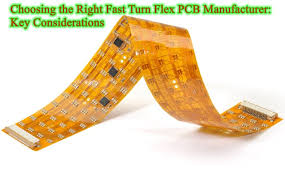
What pricing models do flex PCB suppliers offer?
The pricing for a flex PCB is determined by several factors including the material selection, the layer count, and other features that may be included in the design. The material selection plays a key role in the overall cost as certain materials like polyimide are more expensive than others, but can be necessary for the specific application. The layer count is another factor in the pricing as a higher number of layers will increase the overall cost. However, this relationship is not linear as there are economies of scale that come into play with increasing production volumes.
Additionally, the level of reliability required will affect the pricing for a flex circuit board. Class 1 and IPC-2 boards require a much higher yield rate than class 3 or dedicated service electronic products, which can drive up the costs. The final consideration is batch size as prototypes and small batch sizes will typically require a higher per-unit cost than larger production runs.
Taking the time to carefully optimize your flex PCB design, specifications, and ordering strategy will help to ensure that you obtain a competitive price from your flex circuit board supplier. By making smart material and quantity selections, as well as partnering with your supplier to optimize design and purchasing processes, you can often save substantial amounts on the total cost of your flex circuit boards.